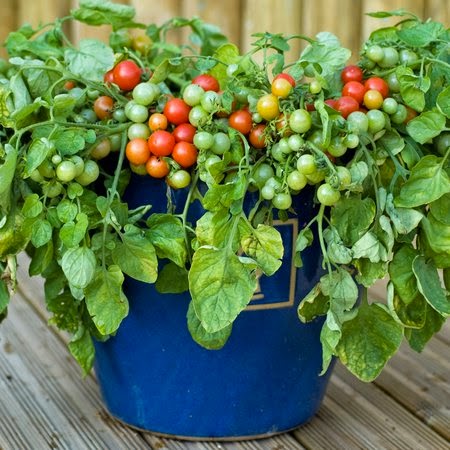
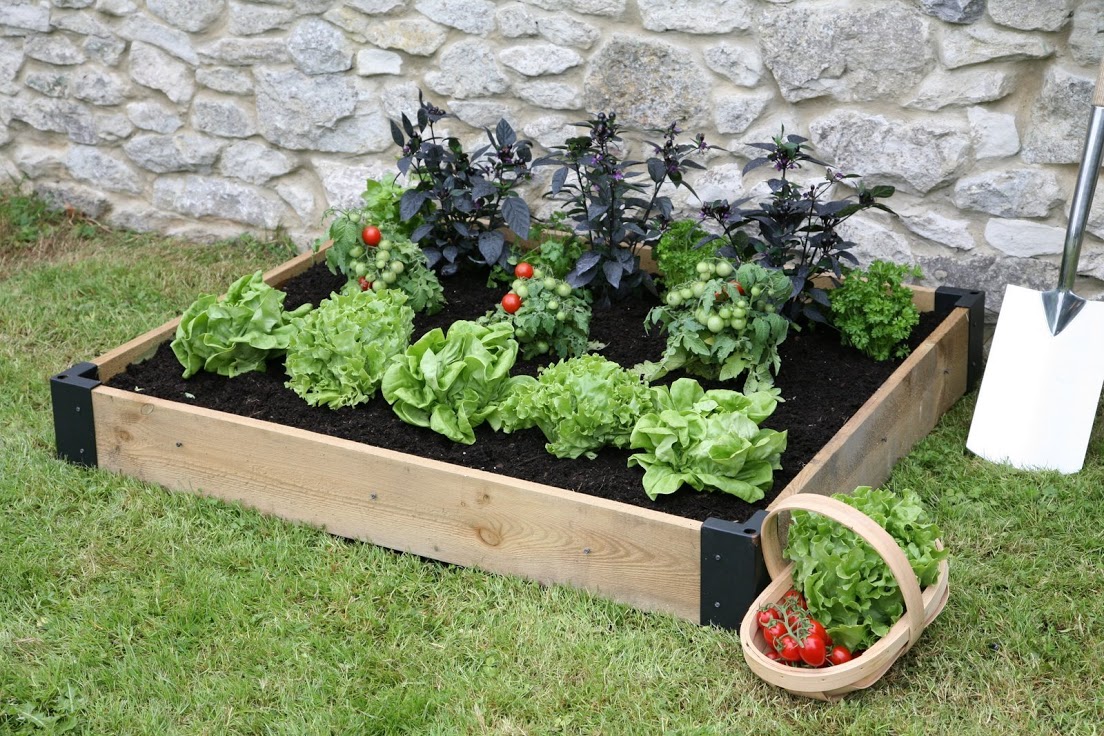
From now on you will flavor your culinary creations with freshly cut herbs!! You will make salads with the most delicious and beneficial vegetables. Why, simply, from now on you will grow everything yourself in……
your terrace!!
How about having it whenever you want freshly cut fragrant
rosemary leaves, basil, mint and lavender; Make it
salads with freshly cut vegetables;
Don't think too much about it!!
Even
if your knowledge of gardening is in the absolute rudimentary,
you can host in your space - in the kitchen, on the balcony or in
veranda- several of your favorite herbs and vegetables.
Seeds or plants;
We start with a question: You plan to buy seeds or young plants; OR
second option has more chances of success and quickly
results, because once the plants have already grown and
provided they "take hold" where you plant them, you can to
two to three weeks to start cutting their leaflets. The
only thing to be careful is to buy healthy plants. According to
their choice, discard those that are weak and crumbly
shoots.
The seeds, on the other side, they may prove more economical,
since one sachet can "give" you up to 50 plants. Before them
buy, check if you are within the sowing season. For better
results, don't sow them in the ground in the first place. Place them
between wet paper towels for one to two days and then
transplant those that sprouted into the soil.
In flower beds or planters;
In both! So many herbs, as much as horticulture can
grow either in garden soil or in large planting containers. The
critical question is in what soil mixture you will plant them. As for the
herbs, would be preferable, but not imperative, avoid them
mixtures that are rich in organic matter, as well as those which
retain large amounts of water. Regarding horticulture, of
whose underground parts are edible (B.C. carrots, potatoes), take care
plant them in a fine-grained mixture, without aggregates. Generally, in the soil
where you will plant the vegetables, you can also put the herbs. The
reverse, Nevertheless, not always the case.
Aromatics
Start by planting mint, rosemary and basil. They are the
less demanding items you can find. To be precise,
it takes a lot of effort not to thrive. When you will be
ready to move on to more difficult missions, try fennel and
the thyme.
To "catch"
Place them in a sheltered and bright place. The sun is
necessary to produce the essential oils, to which they owe them
their fragrances.
Leave the indicated distances between the plants, so that one does not develop at the expense of the other.
Plant them in well-drained soil.
Schedule watering according to the needs of each species, but
and with the weather conditions. For example, in the summer months
you should water the mint daily, while rosemary once
every five to 7 days.
Success tips
Place the herb pots on raised windowsills, so
so you don't have to bend down every time you want to cut their leaflets.
To keep spearmint and mint sprigs bushy, pinch their tops once every ten days.
Your plants will smell more strongly if they are "seen" by the sun for more than three hours a day.
Try something new
Use sprigs of your herbs to flavor it
oil and vinegar. Simply, you cut them in the morning, after the humidity drops but
before the sun rises too high, and leave them in the oil or vinegar
for two weeks. Subsequently, strain it and seal it in glass jars
bottles. An ideal choice for red vinegar is
rosemary, while for the white try a mixture of thyme and
marjoram. To "color" your recipes Mediterranean,
flavor the virgin olive oil with rosemary, thyme and marjoram.
Close lavender leaves in cotton cloth bags and
use them as fragrances for your drawers and cupboards.
Add fresh mint leaves to the ice trays and make ice cubes for cool cocktails.
Garnish with lavender sprigs, basil or rosemary
casual or your formal table. You can decorate the towels or
the candles.
Horticulture
The recipe for horticultural success is not in planting, but
in the care that will follow. More specifically, hiding in
watering, in lubrication, in weeding, in protection from enemies and
diseases, and – in some cases – to support the shoots.
The best way to ensure that your plants will benefit
to the greatest extent the water you pour them is to plant them in
soil with a sufficient amount of organic matter. And that's because these mixes
they retain moisture and make it available to the roots whenever necessary.
Regarding lubrication, try to plant your plants in one
rich mixture, so that you don't have to put too much fertilizer on them.
If, sure, along the way see that the plants are not growing as they should
had to, although there is no obvious problem, you can
add a small amount of horticultural fertilizer.
Even if you have planted them in pots, you are likely to see
next to them sprouting weeds. To deal with them before they drown
your crop, just root them out. It is too much to
use herbicides for a vegetable garden with dimensions of one
planter or a flower bed. For your convenience, uproot them
"invaders" as they begin to emerge. If you expect to
many gather, weeding will be more laborious and less
effective.
As soon as you start growing your… garden, you will find out
how annoying and threatening snails are, the slugs
and the caterpillars. Before resorting to chemical plant protection preparations,
check out the traps released for the first two and on
bacilli for the latter.
Supporting the shoots or protecting the fruits from touching
the soil may prove beneficial for some species, such as the
strawberries, the peas, the beans.
Inseparable friends and spineless enemies
Sometimes planting two or more species close to each other,
can increase or decrease production yields.
We use cookies to give you the best experience on our website. ΡυθμίσειςAgree
Privacy & Cookies Policy
Privacy Overview
This website uses cookies to improve your experience while you navigate through the website. Out of these cookies, the cookies that are categorized as necessary are stored on your browser as they are as essential for the working of basic functionalities of the website. We also use third-party cookies that help us analyze and understand how you use this website. These cookies will be stored in your browser only with your consent. You also have the option to opt-out of these cookies. But opting out of some of these cookies may have an effect on your browsing experience.
Necessary cookies are absolutely essential for the website to function properly. This category only includes cookies that ensures basic functionalities and security features of the website. These cookies do not store any personal information.